English
- English
- 中文
How to understand the secondary lithium battery pack marked on the mobile phone battery? Secondary lithium battery pack means second-hand battery?
Time: 2025-03-04 11:01:30
Author: Shenzhen GXHS Electronic Technology Co., Ltd.
Click:
The marking of "secondary lithium battery pack" on mobile phone batteries is mainly based on its technical characteristics and safety specification requirements, and the specific reasons are as follows:
The marking of 'secondary lithium battery pack' on mobile phone batteries is mainly based on its technical characteristics and safety specification requirements, and the specific reasons are as follows:

1. The meaning of 'secondary'.
Rechargeable Charge & Discharge:
'Secondary battery' refers to a rechargeable battery, as distinguished from a non-rechargeable 'primary battery' (e.g., dry battery).
Mobile phone batteries need to be charged and discharged frequently, and lithium-ion batteries (Li-ion) have become the mainstream choice because of their high cycle life (about 300-500 complete charge and discharge).
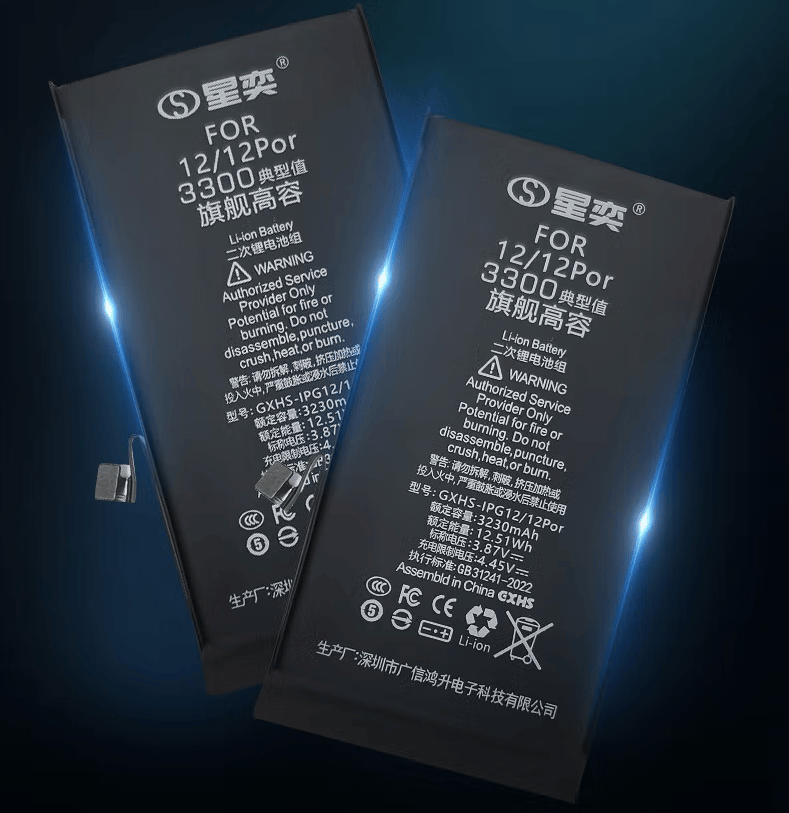
2. Labeling 'Lithium Battery'.
Battery Chemical Type Identification:
Li-ion: The main type of mobile phone battery at present, with high energy density (200~300Wh/kg) and no memory effect.
Lithium polymer (Li-Po): used in some high-end mobile phones, the electrolyte is in gel form, and the shape can be customized, and the safety is slightly better.
Lithium batteries are labeled to clarify their chemical system, so that users and regulators can identify potential risks (e.g., overcharging, high temperature fire).
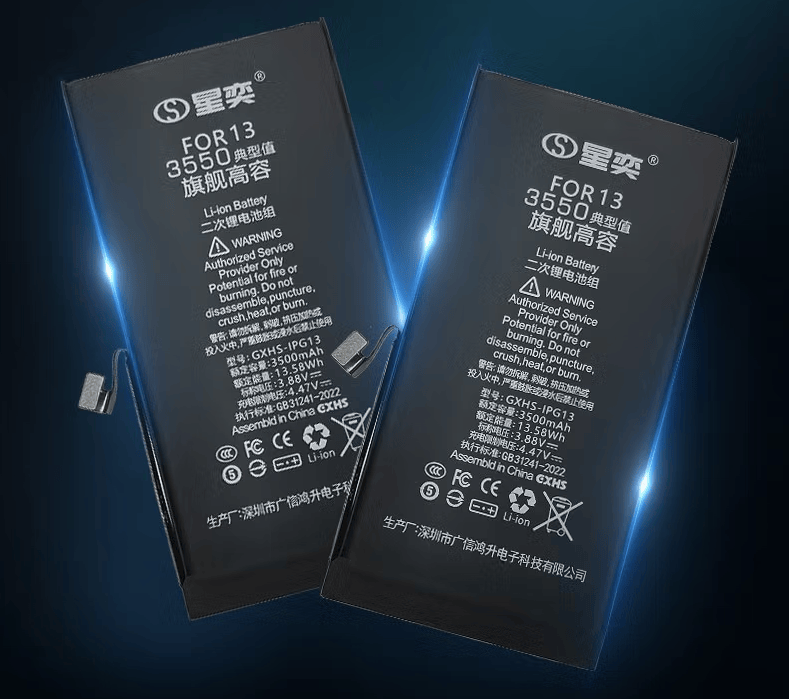
3. Composition of the 'battery pack'.
A mobile phone battery is not a single cell, but an integrated system:
Cell: core energy storage unit (such as 18650 cylindrical cell or laminated pouch cell).
Protection Circuit (BMS):
Overcharge/overdischarge protection, temperature monitoring, short-circuit protection.
Example: The built-in IC chip of the iPhone battery monitors the voltage and current in real time.
Housing & Interface:
The metal/plastic package ensures structural stability and the contacts are matched to the motherboard of the phone.
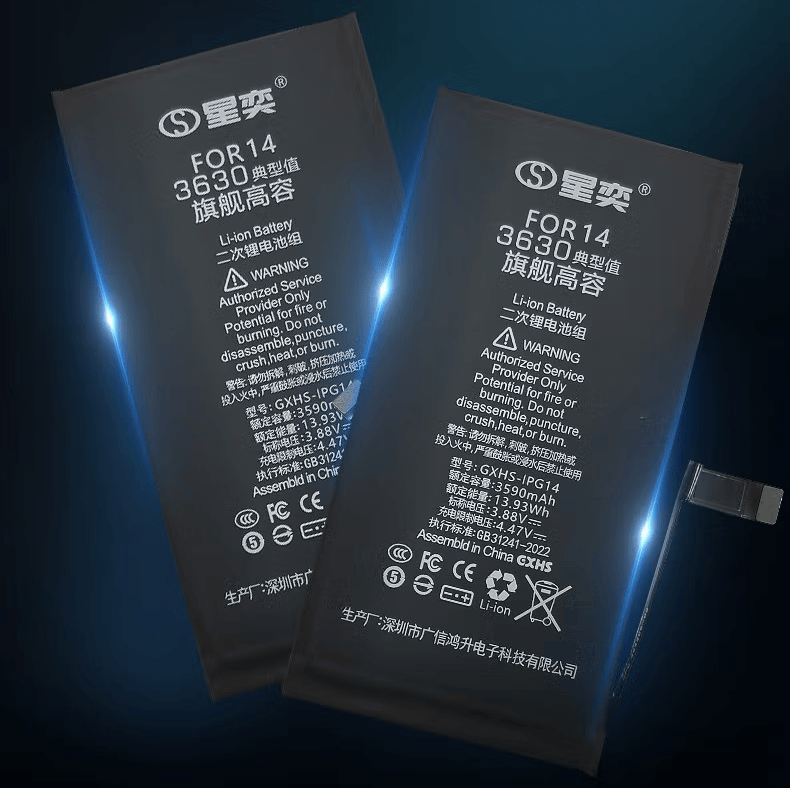
4. Safety and Regulatory Requirements
International standards:
UN38.3 (Transport Safety Certification) and IEC 62133 (Safety Standard) require that the battery type be clearly indicated.
Regulations in China:
The 'Safety Requirements for Lithium-ion Batteries and Battery Packs for Portable Electronic Products' (GB 31241-2022) makes it mandatory to label 'lithium battery packs'.
User Alert:
Remind the user to avoid dismantling (which may cause a short circuit) and not to throw it into fire (the electrolyte is flammable).
5. Environmental protection and recycling labels
Environmental Requirements:
Lithium batteries contain heavy metals such as cobalt and nickel, which need to be professionally recycled (such as the EU WEEE directive).
Marked with 'secondary lithium battery pack' is convenient for recycling institutions to classify and process.
Circular Economy:
Some manufacturers (such as Apple) support battery trade-in, and the labeling information can be traced back to the battery life.
Note to users
Use the original charger: avoid damage to the BMS protection circuit by non-standard voltage/current.
Avoid extreme environments: High temperatures (>45°C) or low temperatures (<0°C) can accelerate battery aging.
Regular calibration: 1 full charge and discharge per month can maintain the accuracy of electricity metering.
summary
The labeling of 'secondary lithium battery pack' is not only a technical definition (rechargeable, lithium chemical system, multi-component integration), but also a mandatory requirement of regulations, aiming to ensure safe use and environmentally friendly recycling. Users can quickly identify the characteristics of the battery through the marking, avoiding the risk of misoperation.

Home | About Us | News | Contact
Product | battery | Rechargeable | Official Mall
Tel :0755-8860 5858
E-mail:cmq@szgxhs.com
Add : F3, No. 18, Dishan North Road,
Xinsheng Community,Longgang
Street, Longgang District,Shenzhen,
Guangdong, China