English
- English
- 中文
Discover why the iPhone doesn't use silicon carbon anode battery technology.
Time: 2024-12-26 11:05:14
Author: Shenzhen GXHS Electronic Technology Co., Ltd.
Click:
With the iterative upgrading of battery technology, there are many emerging routes for mobile phone battery solutions. In the realm of mobile phone batteries, where lithium polymer batteries dominate, newcomers represented by silicon carbon anode batteries, graphene batteries, and solid-state batteries have frequently emerged. Why doesn't the iPhone utilise silicon carbon anode battery technology? Guangxin Hongsheng has compiled the relevant information and discussed and studied it with you.
With the iterative upgrading of battery technology, there are many emerging routes for mobile phone battery solutions. In the realm of mobile phone batteries, where lithium polymer batteries dominate, newcomers represented by silicon carbon anode batteries, graphene batteries, and solid-state batteries have frequently emerged. Why doesn't the iPhone utilise silicon carbon anode battery technology? Guangxin Hongsheng has compiled the relevant information and discussed and studied it with you.
1. Overview of silicon carbon anode battery technology
(1) The principle of silicon carbon anode battery
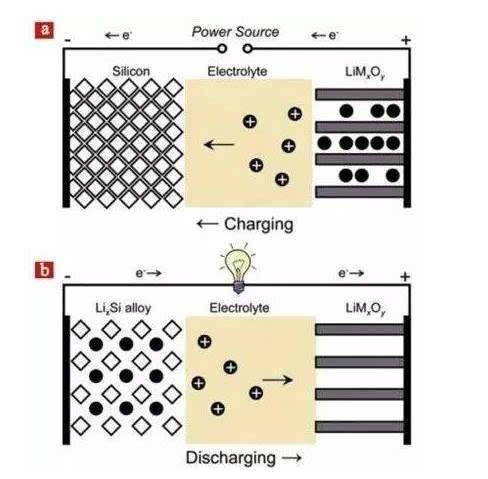
As a new type of lithium-ion battery technology, the principle of silicon carbon anode battery during the charging and discharging process differs from that of traditional graphite anode batteries.
When the lithium-ion battery is functioning, whether it is a silicon carbon anode battery or a traditional graphite anode battery, it adheres to the basic law of lithium ions moving back and forth between the positive and negative electrodes, much like a "rocking chair". When charging, lithium ions are "de-intercalated" from the positive electrode, pass through the separator in the electrolyte, and "embed" in the negative electrode; simultaneously, electrons flow from the positive to the negative electrode in the external circuit. When discharging, lithium ions are "de-intercalated" from the negative electrode, pass through the separator in the electrolyte, and "embed" in the positive electrode, while the electrons flow back to the positive electrode in reverse.
However, the uniqueness of the silicon carbon anode battery lies in its use of silicon materials to enhance the energy density of the battery. The theoretical gram capacity of silicon is about ten times that of graphite, indicating that silicon can hold more lithium ions under the same conditions. Specifically, the graphite anode has a theoretical gram capacity of 372mAh/g, while the pure silicon anode has a theoretical gram capacity of up to 4200mAh/g. During the charging and discharging process, silicon atoms can alloy with lithium ions to form alloy products such as Li12Si7, Li7Si3, Li13Si4, and Li22Si5, thereby facilitating the storage of lithium ions, which is the fundamental principle enabling silicon-carbon anode batteries to achieve high energy density. However, silicon will combine with a large number of lithium ions when charging, causing its volume to expand significantly, and it will shrink when discharged. This substantial volume change is one of the key challenges that silicon carbon anode batteries need to address, and it is also an important starting point for subsequent improvements through composite carbon materials.
(2) Advantages of silicon carbon anode batteries
- Significant increase in energy density Compared with traditional graphite batteries, silicon-carbon anode batteries have significant advantages in high energy density. The gram capacity of silicon is about 10 times that of graphite, and theoretically, if all traditional graphite anode batteries are replaced with silicon materials, the capacity will increase significantly. However, due to the high volume expansion coefficient of silicon during the charging process, most mobile phone manufacturers currently add a small amount of silicon on the basis of graphite. Even so, a silicon-carbon anode battery with a silicon content of about 5%-6% can increase the energy density of the battery by more than 20%. For example, the third-generation Qinghai Lake battery newly released by Honor has a silicon content of 10% and an energy density of up to 773Wh/L, which means that the battery, which originally had a capacity of only about 5000mAh, can be increased to about 6000mAh after adding silicon carbon anode materials, and the volume can be reduced.
- The battery life is effectively enhanced The high energy density directly makes the silicon carbon anode battery excellent in terms of endurance. In mobile phones and other devices, the use of silicon carbon anode batteries can achieve a significant increase in power without major changes in volume. For example, the Xiaomi Mi 14 Ultra has a 5300mAh battery, which is 300mAh higher than the previous generation. OnePlus Ace 3 PRO's glacier battery has a capacity of 6,100mAh, an increase of 1,100mAh from the previous generation. This allows users to use their mobile phones daily without frequent charging, and can more calmly cope with scenarios such as long-term travel, office, or playing various large-scale games and watching videos, which greatly alleviates the user's power anxiety.
- Facilitate the thin and light design of mobile phones The small size and thinness of silicon carbon anode batteries make them very suitable for electronic devices such as folding screen mobile phones. Before the advent of silicon carbon anode batteries, if you wanted to achieve higher battery life, you often used the method of stacking batteries, exchanging volume for capacity, and when you needed to make room for other configurations, you had to sacrifice battery capacity. But the silicon-carbon anode battery changes the situation, and it can significantly reduce the size. For example, Huawei's global commercial tri-fold folding screen mobile phone, Mate XT, uses a new architecture of silicon negative maximum capacity battery, the thickness is compressed to 1.9mm, but the capacity can reach 5600mAh, which not only provides the possibility of thinning the mobile phone, but also provides more space for other devices such as image modules, so that the mobile phone can become thinner and lighter while ensuring battery life, improving the overall user experience. In addition, the silicon carbon anode battery also has better cycle stability at low temperatures. Compared with graphite anode materials, it can effectively improve the common power failure problem of mobile phones in winter. In a cold environment, the activity of traditional lithium batteries will decrease, resulting in shortened battery life or even failure to work normally, while silicon carbon anode batteries have better low-temperature performance and can maintain a stable working state at lower temperatures, which is undoubtedly a great blessing for users living in northern regions.
2. Limitations of silicon carbon anode battery technology
(1) The expansion of silicon materials
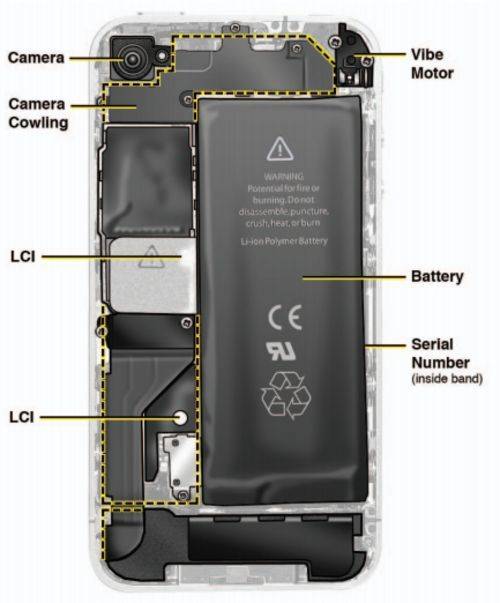
In silicon carbon anode battery technology, the expansion of silicon materials is a key and difficult limiting factor. When silicon is charged and discharged, its volume undergoes a large expansion change, which is quite impressive, up to about 300%. For example, if an object of the right size suddenly increases by four times its original size during work, the pressure on its internal structure can be imagined. In actual use, the battery needs to go through multiple charge and discharge cycles, and the silicon material is prone to crushing after such a large volume change. This is like a spring that has been repeatedly stretched and compressed, and over time, the elasticity of the spring will be lost, or even directly broken. After the silicon material is crushed, it will directly affect the number of cycles of the battery, and the battery that may be able to charge and discharge hundreds of times normally may be greatly reduced because of the crushing of the silicon material, resulting in the battery "aging" in advance and can no longer be used normally. At the same time, the overall performance of the battery will also be affected. For example, the energy density of the battery may not be stable at a high level due to the destruction of the silicon material structure; In addition, the charging and discharging efficiency of the battery will also decrease due to factors such as the crushing of silicon materials and the change of electrode structure. Taken together, these circumstances are very obvious obstacles to the practical application of silicon carbon anode batteries. For example, in some electronic devices with high requirements for battery life and stability, such as smartphones, tablets, etc., if the number of battery cycles is reduced and the overall performance declines, the user experience will be greatly reduced, so this problem needs to be solved urgently, and it is also one of the important reasons for limiting the wider application of silicon carbon anode batteries.
(2) Process and cost challenges
From the perspective of preparation process, there is a relatively complex situation for silicon carbon anode batteries. It is not as mature and standardised as some traditional battery preparation processes, but involves a number of delicate and difficult links. For example, in the process of compounding silicon materials and carbon materials, the proportion control of the two, the composite method and the subsequent treatment require very precise operation and specific process conditions. This complexity directly leads to the difficulty of mass production. It's like building a house; if the construction process is simple, then many houses can be built quickly according to uniform standards, but if the process is complex and requires a variety of special construction skills and material handling methods, then the construction speed will inevitably slow down, and it will be even more difficult to build on a large scale. The same is true for silicon carbon anode batteries, where the complex process limits production efficiency and makes it difficult to manufacture a large number of products that meet market demand in a short period of time. In addition, in R&D and production, the cost involved in silicon carbon anode batteries is also relatively high. In terms of R&D, it is necessary to invest a lot of manpower and material resources to continuously explore how to optimise the process and solve problems such as material expansion, which require financial support; In the production process, special raw materials, high-precision equipment and time-consuming production caused by complex processes will increase costs. For example, the purchase cost of some professional production equipment is high, and the maintenance and operation of the equipment also require continuous investment. The higher cost is reflected in the price of the product, which puts it at a disadvantage compared to traditional batteries in the market competition. For example, some cost-sensitive consumer electronics manufacturers will be concerned about the high cost of silicon carbon anode batteries when considering the adoption of batteries, which has also become one of the key factors limiting their wider application.
3. Characteristics of the current battery technology used in the iPhone
(1) Advantages of lithium-ion battery technology
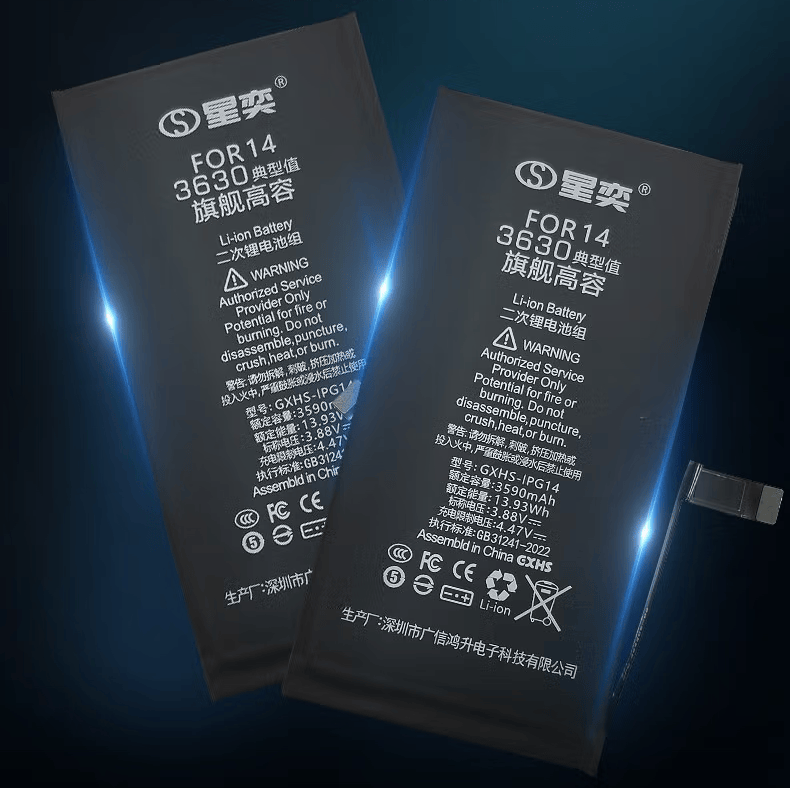
The lithium-ion battery in iPhone offers a number of benefits that make it a stable and excellent battery life. First of all, in terms of charging speed, lithium-ion batteries perform well. Compared to previous generations of battery technology, it can quickly recharge up, for example, to 80% and then switch to slower trickle charging. Depending on the setup and charging device, the time it takes to fill the initial 80% charge will vary, but overall it will allow users to get more power in a shorter period of time, making it easier for users to quickly take their device out and about. Secondly, the advantages in power density are also significant. Lithium-ion batteries provide better battery life in a lighter package, which means that iPhone can meet users' daily needs for longer battery life without the need for a bulky, bulky battery, making it thin and portable. Furthermore, from the point of view of durability, although all rechargeable batteries are consumables and have a limited lifespan, the capacity of lithium-ion batteries will decrease slightly with the completion of each charging cycle, but after many charging cycles, they will still retain 80% of the original battery capacity (depending on the product). In addition, through some reasonable use and maintenance methods, such as avoiding storing or charging the iPhone in a high-temperature environment, and keeping half of the battery power during long-term storage, it can further extend its service life and provide users with relatively long-lasting and stable battery life.
(2) The role of the battery management system
iPhone is equipped with an advanced battery management system (BMS), which plays a vital role in ensuring battery performance and overall safe operation of the device. It can monitor the status of the battery in real time, such as the battery's power, temperature, chemical age, and various parameters during charging and discharging. Then, with the help of intelligent algorithms, the charging process is optimised based on the monitored data. For example, the "Optimise Battery Charging" feature in the system intelligently determines when the function needs to be activated based on the user's daily charging habits, and when predicting that the user is about to connect to the charger for a long time, it will automatically delay charging for more than 80%, thereby reducing the time the iPhone is fully charged, effectively reducing battery wear and tear and extending battery life. In addition, the battery management system is responsible for ensuring the safe operation of the equipment under different conditions. As the battery is chemically aged, in a low state of charge, or at low temperatures, the impedance of the battery changes, which may affect the battery's ability to provide sufficient power to the device. At this point, the battery management system determines the battery's ability to supply power and manages the load to keep the device running. If the device cannot be supported by full capacity, the system will take measures such as shutting down to protect the electronic components inside the phone, prevent damage to the electronic components due to insufficient power and other problems, and ensure that the iPhone can work as stably and safely as possible in various complex usage scenarios and environmental conditions.
4.The possible reason why the iPhone does not use silicon carbon anode battery technology
(1) Fit with product design concept
iPhone has always been known for its simplicity, thinness, lightness and compact interior. In terms of appearance, it pursues the ultimate simplicity and refinement, the overall shape is smooth, and the thickness is strictly controlled, which makes it highly recognisable among many smartphones and is also loved by consumers. In terms of interior space layout, iPhone needs to arrange many components such as chips, camera modules, batteries, and various sensors, and every inch of space is carefully planned to achieve the perfect combination of function and aesthetics. Although silicon carbon anode battery technology has advantages such as high energy density and helps to reduce the design of lightweight, it may have an impact on the existing compactness of the iPhone's internal structure in practical applications. For example, there are still some technical problems to be solved in silicon carbon anode batteries, such as the expansion of silicon materials in the process of charging and discharging. This may be difficult to accept for an iPhone with a very limited interior space and a sophisticated layout. iPhone prefers to use battery technologies that fit seamlessly into its existing design framework without the need for extensive internal adjustments to ensure that the overall product design concept is fully implemented and the high-quality industrial design style is maintained.
(2) Consideration of stability and security
For high-end smartphones like the iPhone, stability and security are critical product features. Users expect the phone to run stably at all times without malfunctions caused by battery problems, and to ensure that it is safe to use and avoid safety hazards such as battery overheating, bulging and even fire and explosion. In silicon carbon anode battery technology, factors such as the expansion of silicon materials will bring challenges to the stability of the battery. Silicon will combine a large number of lithium ions when charging, the volume expands significantly, and shrinks when discharged, after multiple charging and discharging cycles, it is easy to crush, which will affect the number of cycles and the overall performance of the battery, such as the energy density of the battery may not be stable at a high level, and the charging and discharging efficiency may also decrease. In the face of these possible stability risks of silicon carbon anode batteries, in order to ensure a good user experience and avoid troubles caused to users due to battery performance fluctuations, Apple will be cautious before solving these potential problems, and will not easily adopt this technology for the time being, giving priority to ensuring that each iPhone can reach the top level in the industry in terms of stability and security.
(3) The continuity of the existing technical route
In the research and development and application of battery technology, iPhone has long formed a relatively mature and effective inherent route. It has been continuously optimised and improved around lithium-ion batteries, and has achieved remarkable results in terms of charging speed, power density, and service durability. For example, by optimising the battery management system, fast charging is possible, allowing users to get more power in a short period of time, while lithium-ion batteries provide excellent range in a lightweight form factor and retain high original battery capacity after multiple charge cycles. In the case that the existing technical route can meet the current product needs, and there is still some room for optimisation, iPhone has no urgent need to switch to silicon carbon anode battery technology for the time being. After all, switching battery technology means making large-scale adjustments to the entire battery R&D, production and adaptation, involving a lot of manpower, material resources and technical verification. Moreover, the existing lithium-ion battery technology with the advanced battery management system can already provide relatively stable and efficient battery life for the iPhone, so that Apple can focus more on other key technological innovations and user experience improvements, such as chip performance improvement, image system optimisation, etc., so the original battery technology route is still continued.
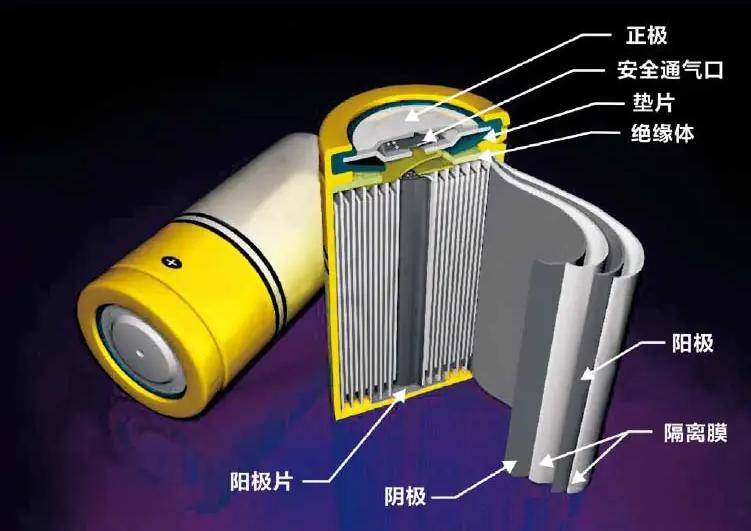
In short, the iPhone continues the mature and stable lithium polymer battery solution, based on the significant advantages, obvious shortcomings and cost disadvantages of the silicon carbon anode battery, it is reasonable to maintain a cautious and wait-and-see attitude in the new battery solution. However, we firmly believe that the introduction of a more advantageous mobile phone battery solution represented by solid-state batteries will not be too far away.

Home | About Us | News | Contact
Product | battery | Rechargeable | Official Mall
Tel :0755-8860 5858
E-mail:cmq@szgxhs.com
Add : F3, No. 18, Dishan North Road,
Xinsheng Community,Longgang
Street, Longgang District,Shenzhen,
Guangdong, China